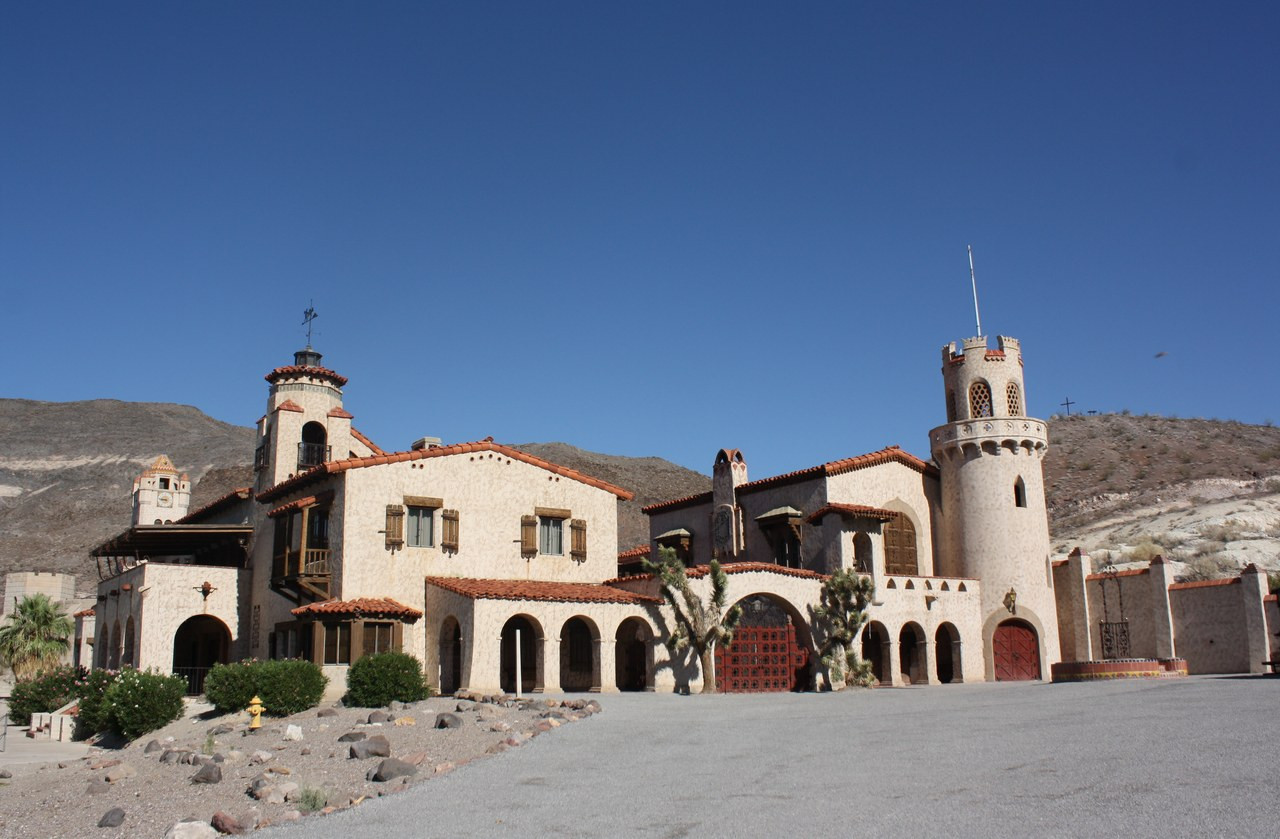
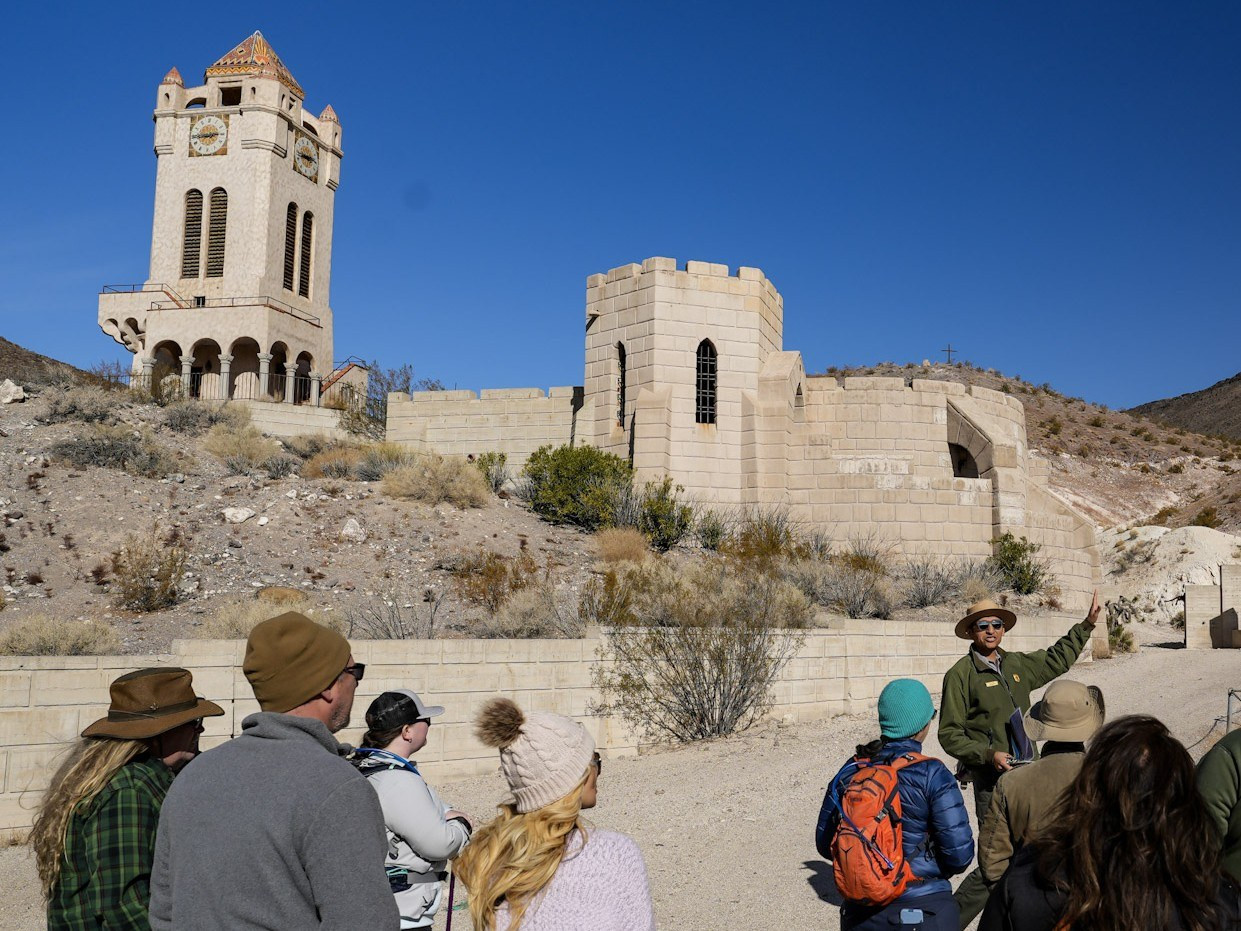
Scotty’s Castle can receive visitors again, but only in a carefully limited way. The National Park Service opened a new season of guided exterior tours on October 10, 2026, while construction, collections work, and utility restoration continue across the historic district.
The tours are planned for most Saturdays and Sundays through April 17, with private weekday visits available by request. They do not include the furnished interiors. The National Park Service says November 2028 is the earliest anticipated date for full reopening, and even that remains dependent on projects that are not yet complete.[1]
The disaster arrived in five hours
On October 18, 2015, 2¾ inches of rain fell at the estate in five hours, following another half-inch the day before. Water, mud, and rock accelerated down Grapevine Canyon in a debris flow the National Park Service estimates at 3,200 cubic feet per second. Power poles and dumpsters moved through the canyon. Visitors were stranded near Ubehebe Crater. Mud and rock accumulated around historic structures and entered several of them.[2]
The damage extended far beyond the principal residence. Most of the eight-mile Bonnie Clare Road was destroyed. The spring collection system, a reservoir, a 4,000-foot water main, sewer infrastructure, power and communications components, walkways, landscaping, and more than a mile of concrete boundary posts were damaged or lost. Reopening required the National Park Service to treat the estate as a connected district rather than one building behind a gate.
Recovery had to anticipate the next flood
Replacing what washed away would not have been enough. Federal Highway Administration work redesigned and armored the access road. Engineers installed erosion protection around the historic bridge and constructed new flood-control works uphill from the district, including an earthen berm faced with rock-filled gabion baskets. Smaller walls and a concrete-lined drainage channel protect other structures.
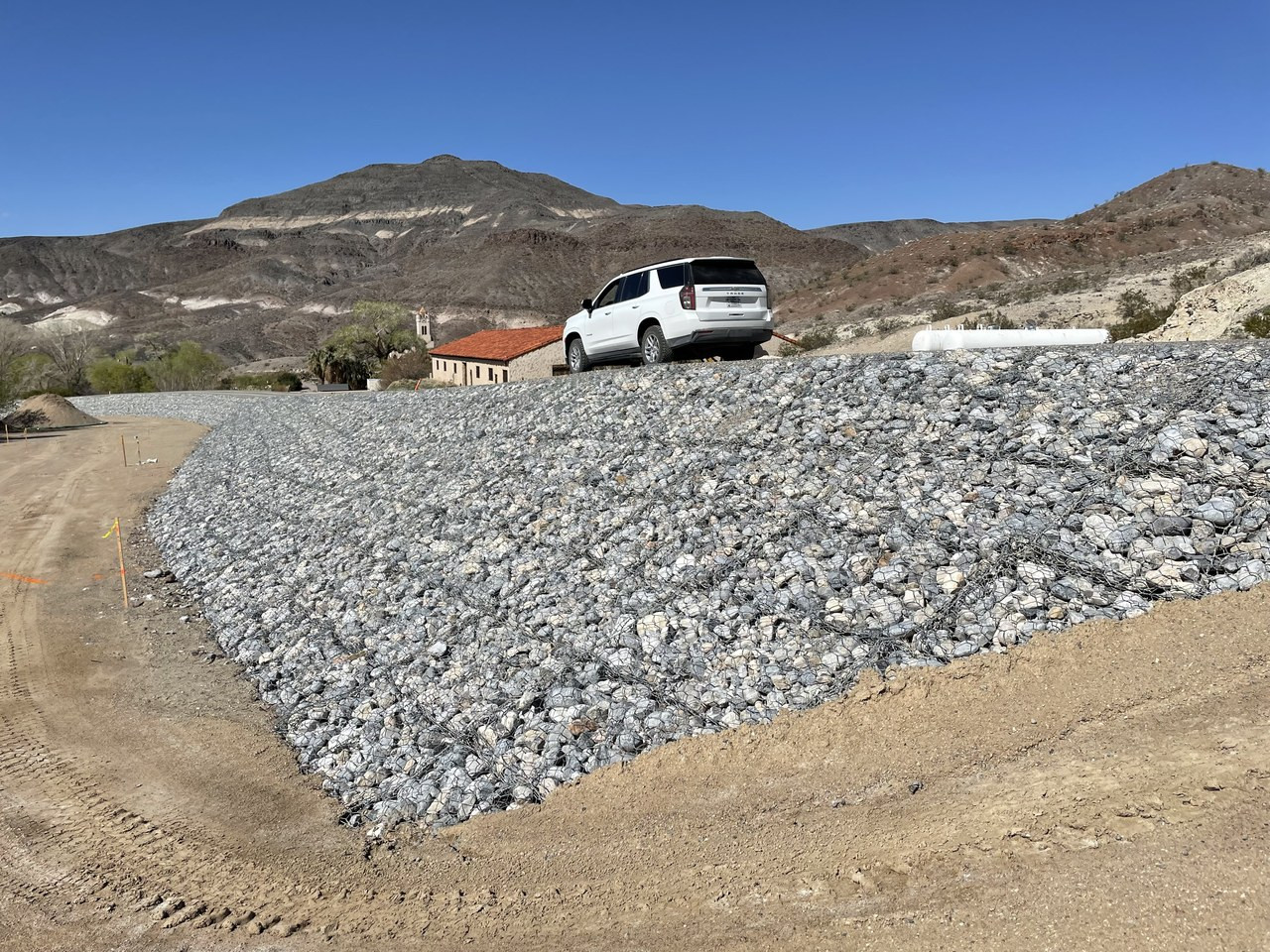
The flood-resilience work has already faced real conditions. When remnants of Hurricane Hilary reached Death Valley in August 2023, the new structures protected the historic district even as other park roads and facilities sustained major damage. A section of the rebuilt access road had also been undercut by an atmospheric-river event earlier that year, requiring another repair completed in 2025.[2]
A recovery interrupted by fire
The historic garage, later used as the visitor center, demonstrates why the schedule has kept moving. Floodwater broke through its doors, windows, and walls and left about four feet of mud and rock inside. Repairs were roughly 60 percent complete when contractors arrived on April 22, 2021, to find the building on fire. The garage was destroyed, and the adjacent Longshed was damaged.[2]
The National Park Service concluded that reconstruction would be the most appropriate long-term response, but that work is not funded for completion before the rest of the site reopens. In the nearer term, the historic Gas Tank building is planned as a small visitor-contact station. The next construction phase, expected to begin in 2027, includes the parking area, Longshed, and Gas Tank building.[1]
The castle began as a useful fiction
Death Valley Ranch was developed in the 1920s by Chicago businessman Albert Mussey Johnson as a winter retreat for himself and his wife, Bessie. Johnson’s friend Walter “Death Valley Scotty” Scott supplied the legend. Scotty told reporters that secret gold-mine profits paid for the estate; Johnson, who financed it, played along and called himself Scotty’s banker.[3]
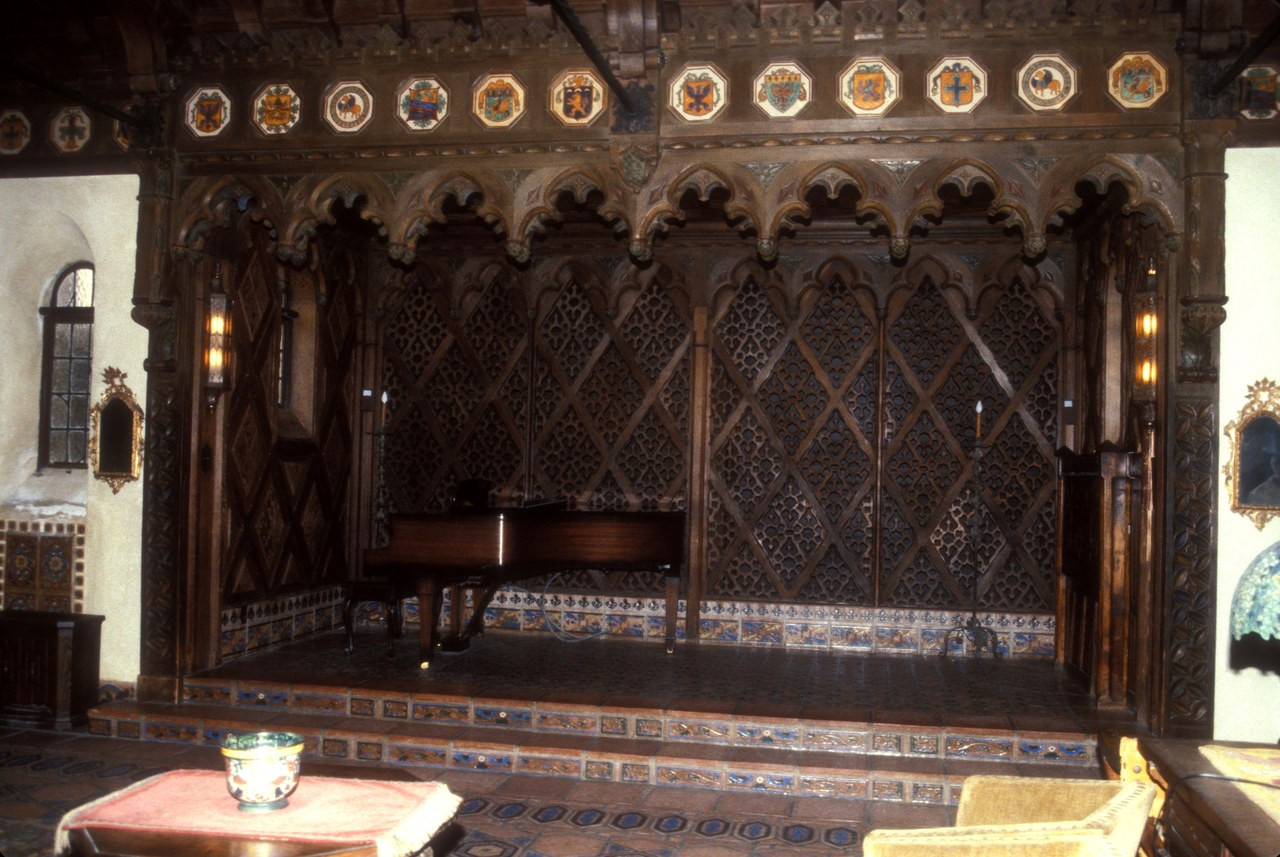
The arrangement gave an elaborate private retreat a public character before it became a park property. Reporters and visitors arrived for the story. Construction developed from simple early structures into a Spanish Revival complex with towers, arcades, tiled roofs, carved wood, metalwork, gardens, a Powerhouse, and carefully furnished rooms.

Johnson had studied civil engineering, and the estate’s infrastructure matched his interest in systems. The National Park Service describes the property as an engineer’s dream, supported by diesel generation, Pelton water wheels, water supply, workshops, service buildings, and equipment required to operate a landscaped retreat in the desert.[4]
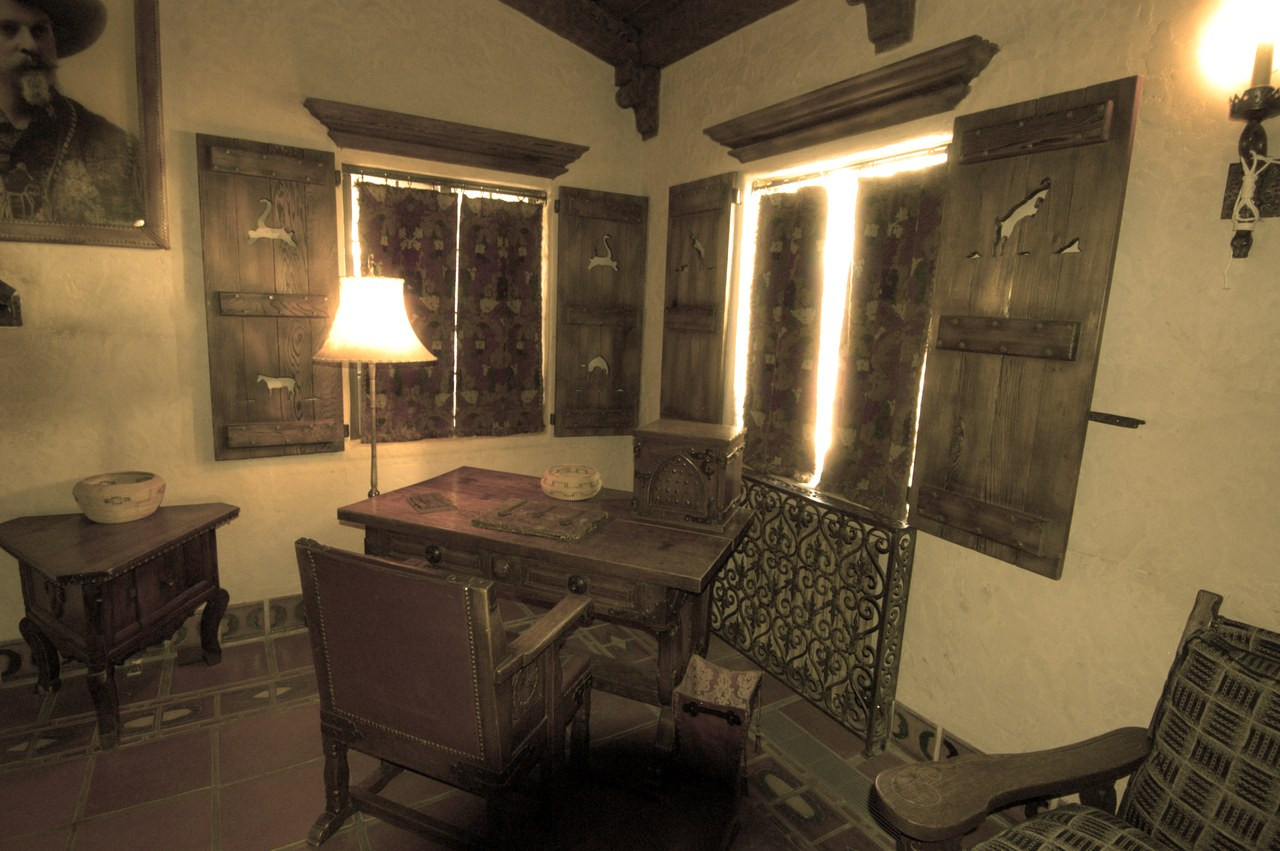

An unfinished estate awaits its collections
Construction stopped in 1931 after Johnson learned that a surveying error had placed part of the project on federal land. The Depression added financial pressure, and the work never resumed. The incompleteness became part of the estate’s identity: a lavish compound whose unfinished spaces and elaborate operating systems remained visible at the same time.[3]
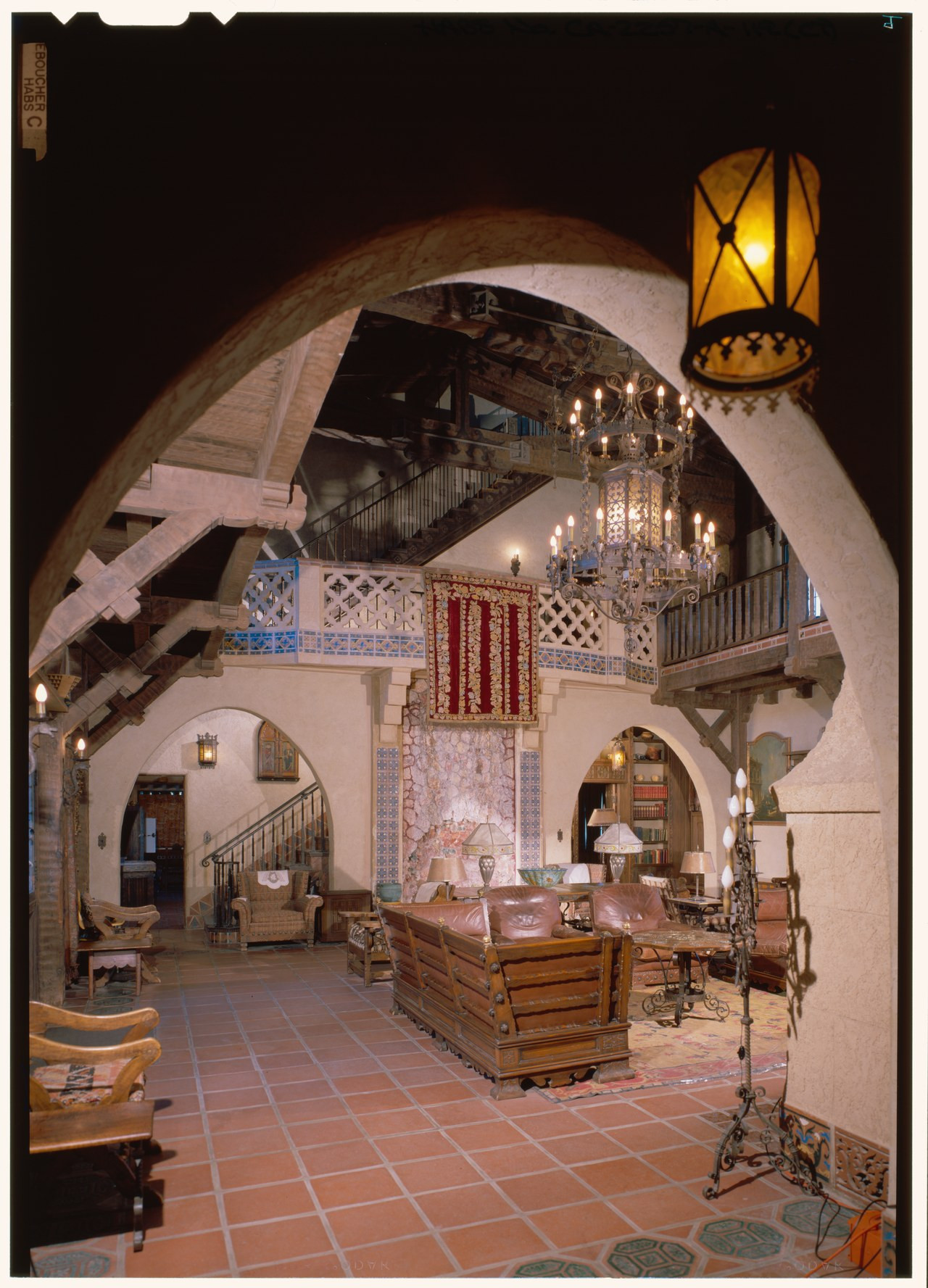
Today the delay is less about finishing Johnson’s original vision than returning a museum operation without exposing its collections or visitors to unfinished infrastructure. Furnishings and artifacts were moved or stabilized after the flood. Curatorial staff will return them after construction, before interior tours resume.
The new exterior tours therefore mark a threshold rather than an endpoint. Visitors can again read the relationship among the residence, Powerhouse, Chimes Tower, canyon, roads, and flood works. The furnished interiors must wait until the larger system is ready to support them.
Sources and further reading
- National Park Service — October 8, 2026 tour announcement and reopening timeline
- National Park Service — 2015 flood, recovery cost, completed work, remaining projects, and fire
- National Park Service — construction history, Walter Scott mythology, and 1931 halt
- National Park Service — Death Valley Ranch overview and estate systems
- National Park Service — Albert Mussey Johnson biography and property history