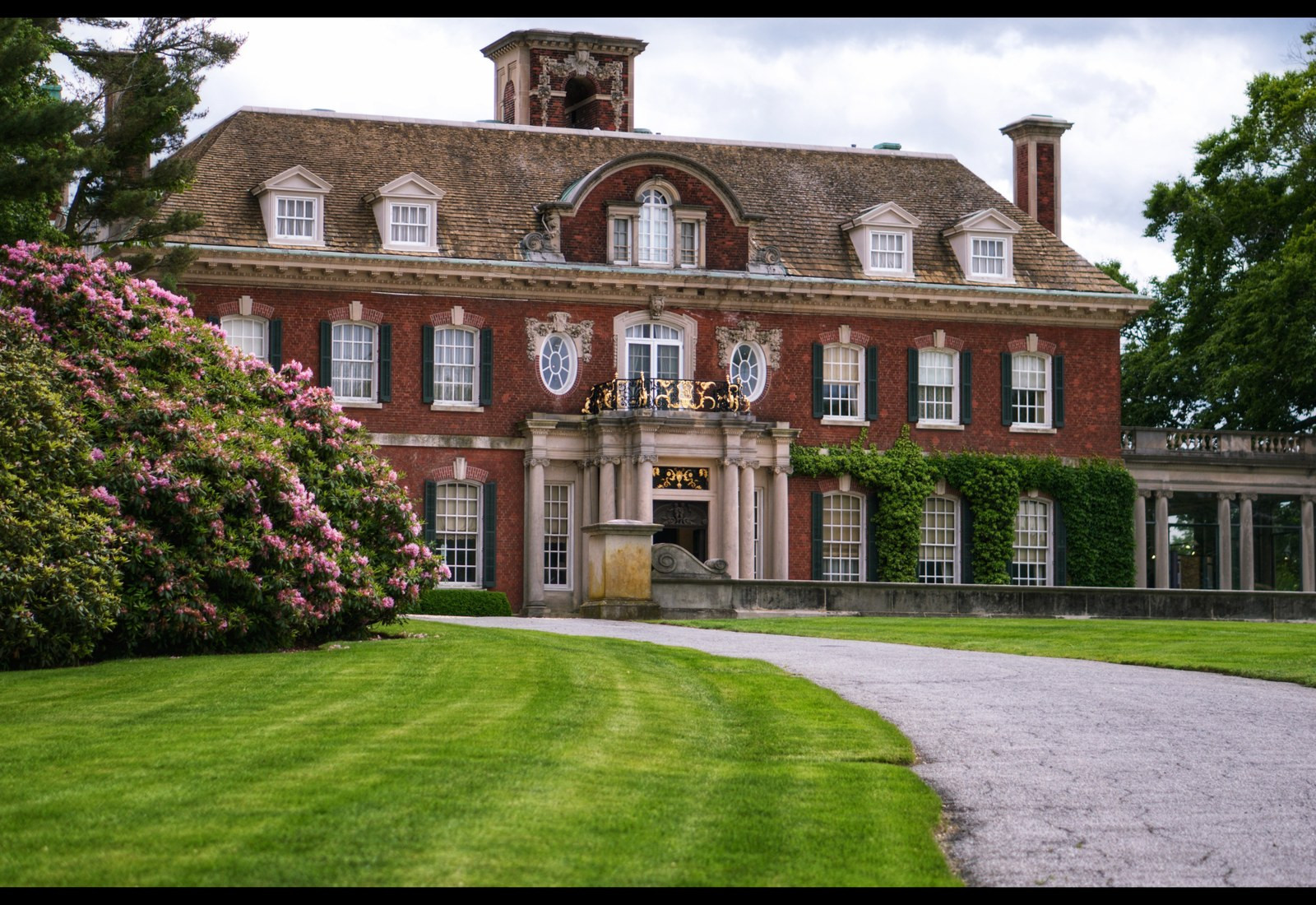
During her mother’s illness in June 1956, Peggie Phipps Boegner confronted the possibility that the Long Island estate where she had grown up could be lost. That realization became the beginning of Old Westbury Gardens.
The institution’s history describes Boegner recognizing that the estate’s beauty and the family life attached to it might disappear. With encouragement from her husband and support from her brothers, she helped establish a public future for the property. Old Westbury Gardens officially opened to visitors in 1959.[1]
The preservation decision came well before the estate’s federal record. The National Park Service gives November 8, 1976—exactly 50 years before this feature—as the publication date for its National Register record.[3]


The mansion and gardens began as one project
John S. “Jay” Phipps was the eldest son of Henry Phipps Jr., a partner in Carnegie Steel. Jay married Margarita “Dita” Grace of the Grace shipping family. In 1904, Jay approved English designer George A. Crawley’s plans for a new Long Island residence.[1]
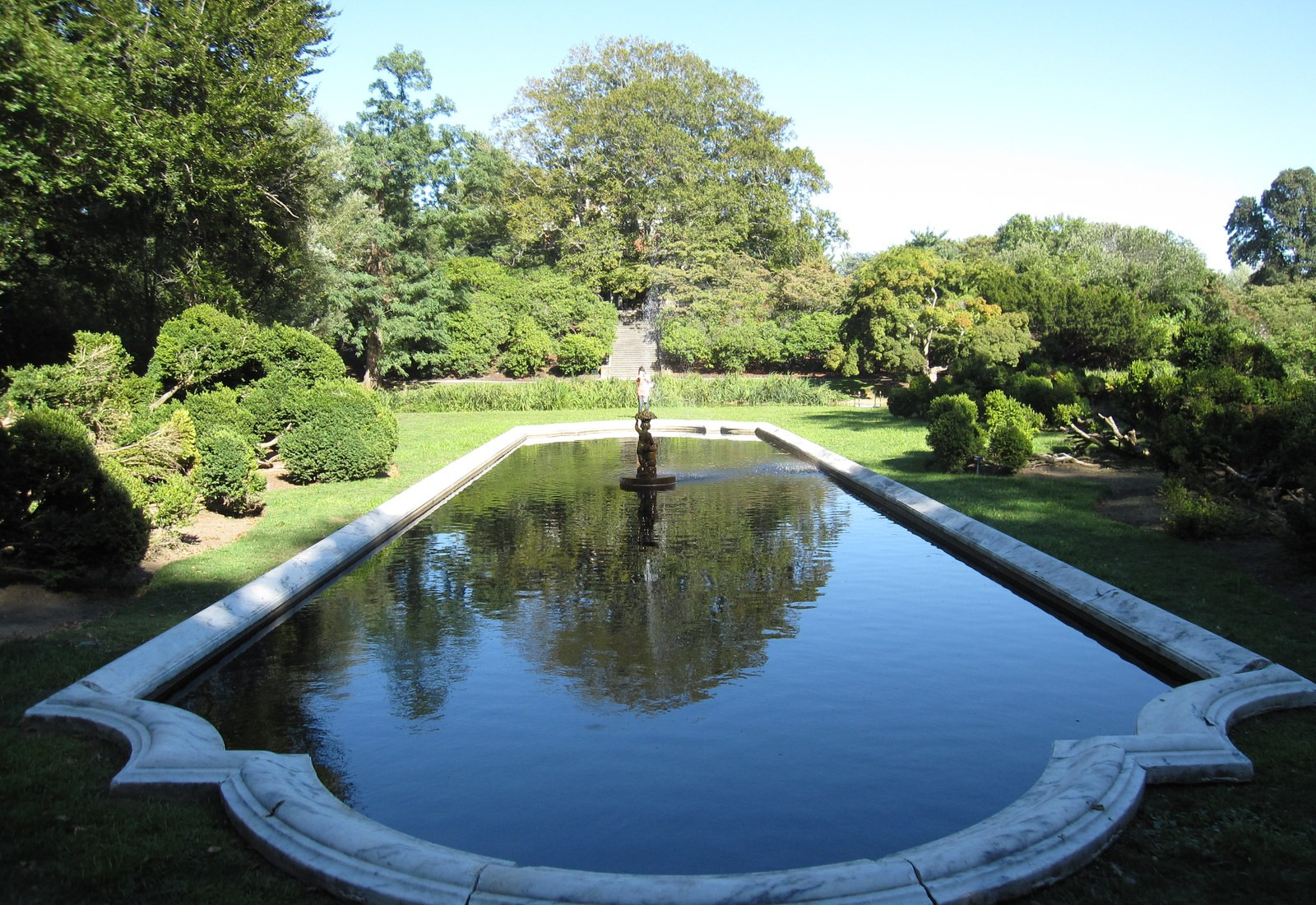
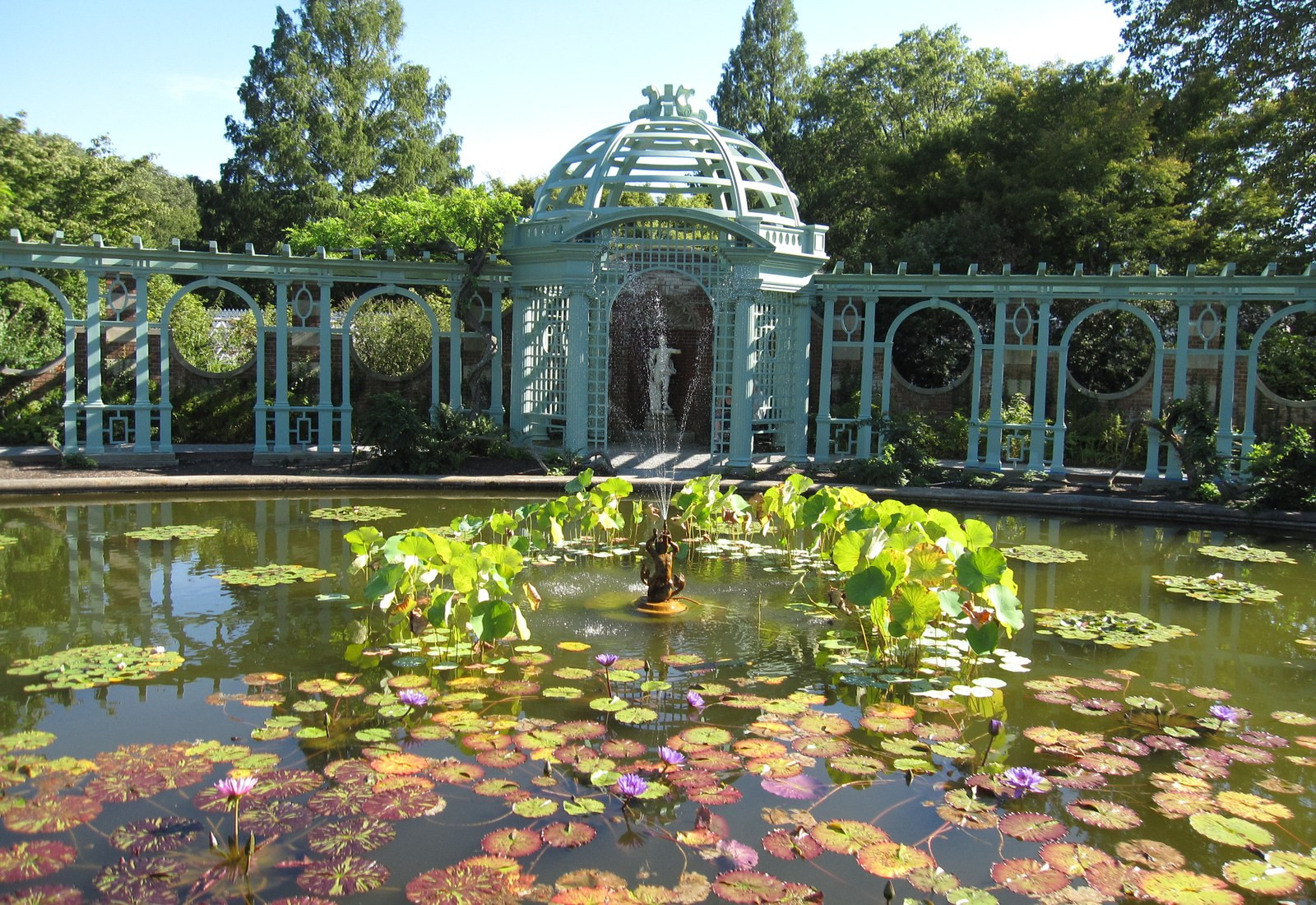
The official narrative says Jay had recently purchased 175 acres when planning began in 1904. Construction, roads, allées, and formal gardens advanced together. The current institution describes the result as a Charles II-style mansion completed by Crawley in 1906, now surrounded by 200 acres of formal gardens, landscape, woodland, ponds, and lakes.[1][2]



A family estate became a complete world
Jay, Dita, and their first three children moved into the mansion in March 1907. The estate history records ponies, polo fields, sports, family parties, and a miniature thatched cottage created for their daughter.[1]
Those details matter because Boegner was not preserving an isolated architectural object. She was trying to retain the setting where the family’s private life, recreation, landscape, rooms, collections, and routines had operated together.


The rooms preserved more than a floor plan
Old Westbury’s significance also rests inside. The institution says the mansion retains English antiques and decorative arts accumulated during more than 50 years of family occupancy.[2] Public-domain photographs made in 1961 show furnished rooms rather than empty architectural shells.
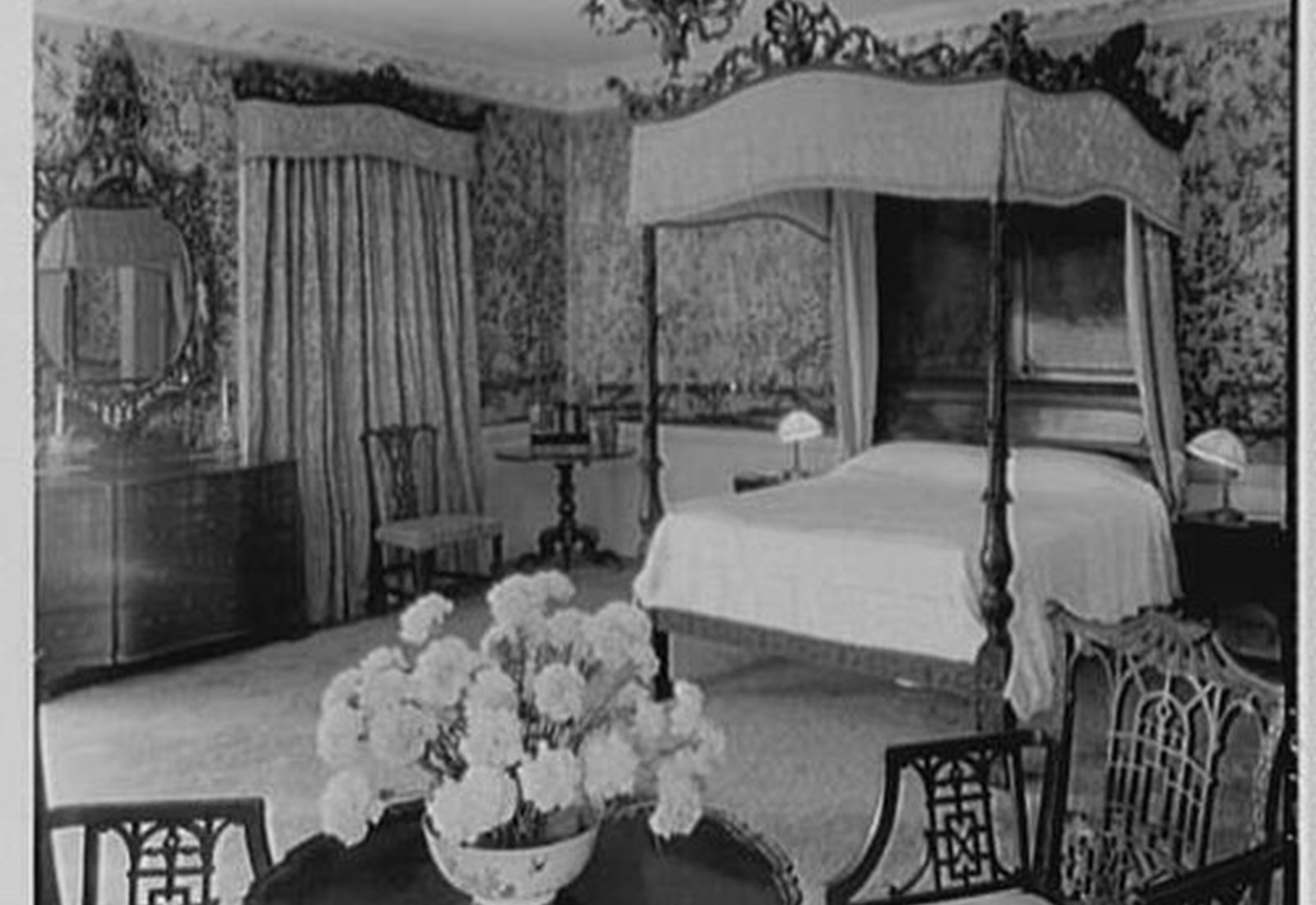

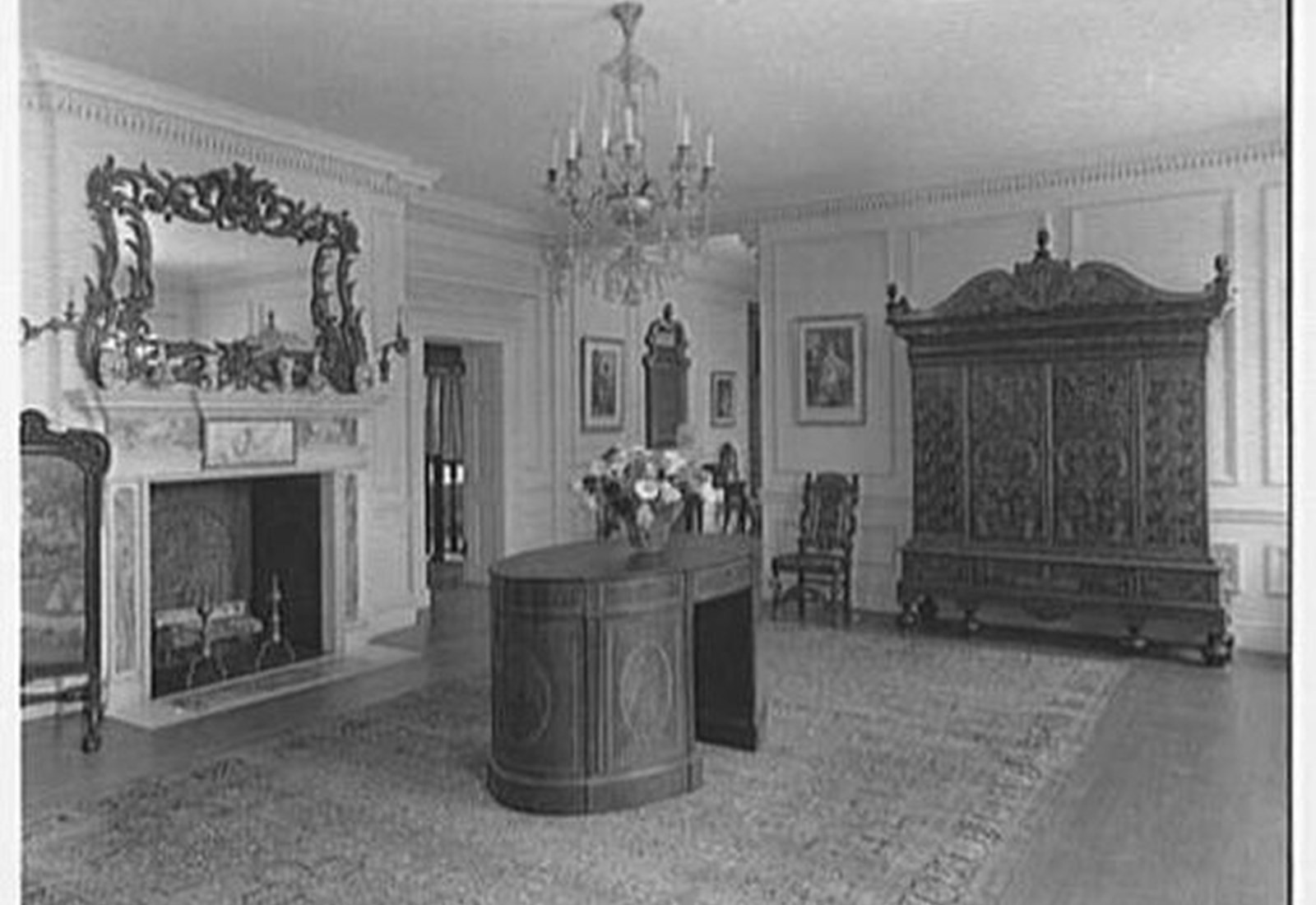

The National Park Service record identifies architecture and landscape architecture as the estate’s areas of significance, names Crawley as architect, and gives 1906 as a significant year.[3] The record formalized values that the family had already chosen to protect through public access.
Preservation began with a personal refusal
After Jay and Dita died, Boegner, her husband, and her brothers established a public future for the estate. Old Westbury Gardens opened to visitors in 1959, seventeen years before the National Park Service record was published.
Fifty years after that federal record, the mansion, gardens, collection, and family history remain together. National recognition documented an estate the family had already chosen to preserve.
Sources and further reading
- Old Westbury Gardens — official family, construction, estate-life, preservation, and 1959 public-opening history
- Old Westbury Gardens — official architectural summary, 200-acre landscape, interiors, collections, and preservation mission
- National Park Service — National Register record metadata, publication date, architect, significance, period, and significant year
The published photographs are a property-specific editorial selection from Wikimedia Commons. Individual creators and licenses are identified in captions; the 1961 Library of Congress interiors are public domain. Source links and attribution are retained.